
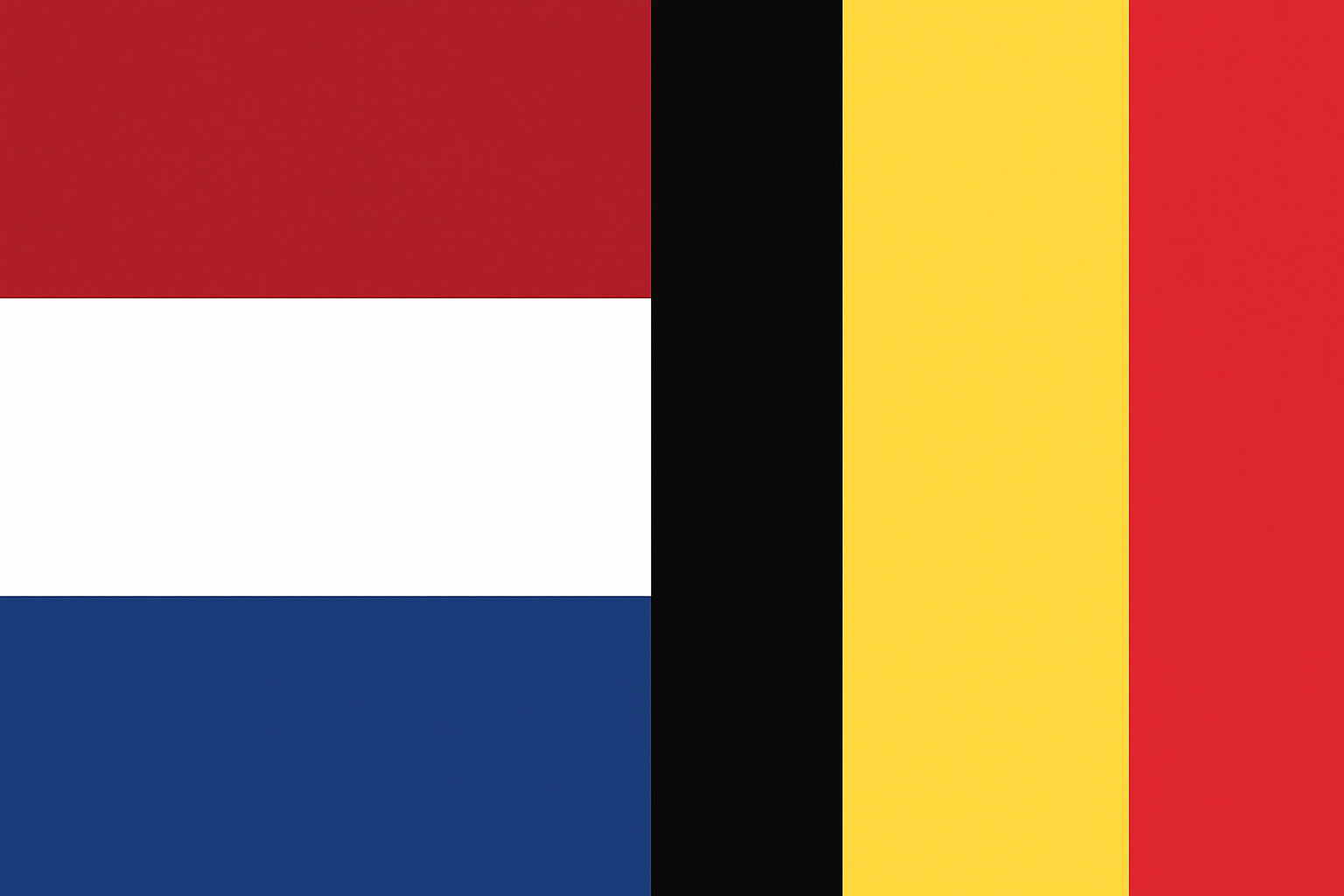
Dutch vs. Flemish: What Are the Real Differences?
Here’s the short answer: Dutch and Flemish are the same language — but with differences big enough that a Dutch person and a Flemish person instantly know where the other is from. Think British vs. American English: same grammar, same dictionary, but different accents, different everyday words, and a very different vibe. Let’s break down what actually separates them.
First: it’s officially one language
“Flemish” (Vlaams) isn’t a separate language — it’s the collection of Dutch dialects spoken in Flanders, the northern Dutch-speaking region of Belgium. Both the Netherlands and Flanders use the same standard written language, governed jointly by the Nederlandse Taalunie (Dutch Language Union). A book published in Amsterdam is sold unchanged in Antwerp.
The difference you hear instantly: pronunciation
- The “g” sound — The Dutch harde g (hard, throaty) vs. the Flemish zachte g (soft, gentler). This is the single biggest tell.
- Melody — Flemish sounds softer and more sing-song; Northern Dutch sounds flatter and more clipped.
- The “r” — Flemish often uses a rolling/trilled r; the Netherlands has many variants including the “Gooise r” (almost English).
- Vowels — Flemish vowels tend to be more “closed” and conservative, closer to older Dutch.
Different everyday words
| English | Netherlands | Flanders |
|---|---|---|
| mobile phone | mobiel / telefoon | gsm |
| juice | jus / sap | fruitsap |
| nice / fun | leuk | plezant |
| bag | tas | zak |
| to call | bellen | telefoneren |
| breakfast | ontbijt | ontbijt / dejeuner |
Flemish also borrows more from French (Belgium is bilingual), so you’ll hear words like merci for thank you and salut for goodbye in casual speech.
Formality and tone
Flemish speakers tend to use the formal u (you) more often and come across as more polite and reserved. Northern Dutch leans heavily on the informal je/jij and is famously direct — sometimes startlingly so for newcomers. Flemish politeness vs. Dutch bluntness is one of the clearest cultural divides.
Which one should you learn?
Learn Standard Dutch (the Netherlands variety) — it’s what 95% of courses, apps, and exams teach, and it’s understood everywhere Dutch is spoken, including Flanders. If you’re moving specifically to Flanders, you’ll naturally pick up the local accent and vocabulary once you’re there. The foundation is identical.
Learn Standard Dutch the smart way
Dutch Daily teaches Northern Standard Dutch — understood across the Netherlands and Flanders. Daily lessons, pronunciation training (including the famous hard g), and scenario practice.
Start learning Dutch →Frequently asked questions
Can Dutch and Flemish people understand each other?
Yes, completely — in standard form. Strong regional dialects (West Flemish, for example) can be challenging even for other Dutch speakers, but standard Flemish and standard Dutch are mutually intelligible.
Is Flemish a dialect or a language?
Linguistically, Flemish is a group of dialects of Dutch, not a separate language. Officially, the language of Flanders is simply “Dutch” (Nederlands).
Will learning Dutch help me in Belgium?
Absolutely. Standard Dutch works perfectly in Flanders (the northern ~60% of Belgium). The southern region speaks French, and Brussels is officially bilingual.